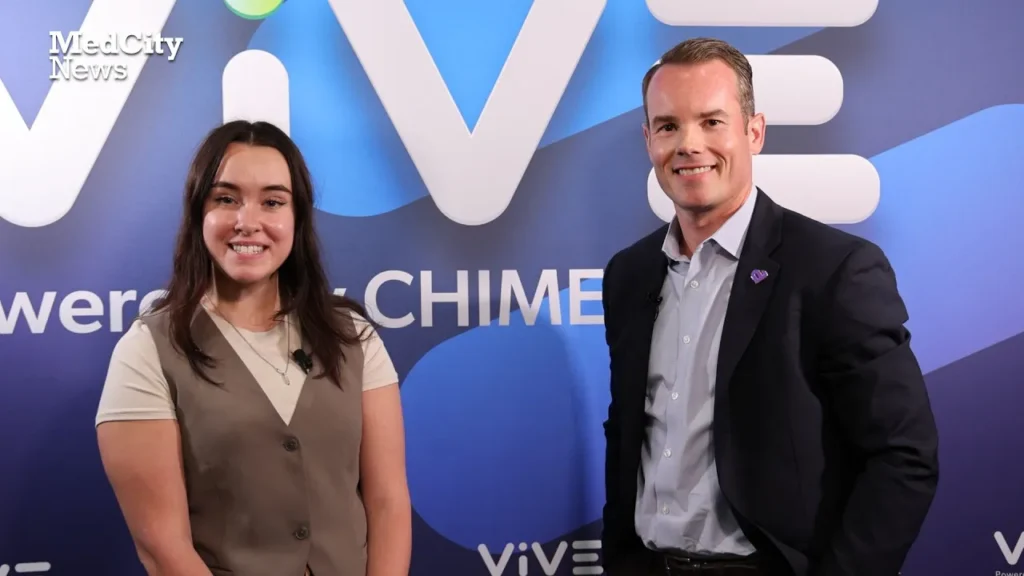
Katie Adams: Hello, I’m Katie Adams with MedCity News, and I’m here with Tom McIntyre, who’s the President of Artera. Thanks so much for being here today.
Tom McIntyre: Yeah, great to be here, thanks for having me.
Katie Adams: Of course. So I know that your company has more than 1,000 customers using its platform. So I wonder what that does that look like in practice? how do those customers deploy those tools? I’m assuming it might look a little different for each customer.
Tom McIntyre: Yeah, you’re right. As you mentioned, we have 1,000 customers or healthcare organizations all the way from large federal agencies to specialties and physician practices, and they all use Artera slightly differently because they have different operational goals and all their different patient populations are unique. But whether you’re a VA med center or high-volume orthopedic clinic, the means to achieve those goals is always the same, and that’s deliver great communications to your patients.
So, for example, we might, you know, deploy Agentic AI at an orthopedic clinic, nd we might focus on scheduling an intake workflows to automate and manage through high throughput. Or we might be at a primary care facility where we’re managing caregap outreach for things like annual wellness visits or flu vaccination reminders.The good news is, with Artera, we are always a partner first to our customers. So we’re there from day one through initial deployment, and through their long-term success to make sure that we customize the deployment in a way that fits their needs But also, we’ve been in this business for over a decade, so we’re bringing a decade of experience and best practices and lessons learned to all of our customers to make sure they’re set up for success from day one.
Katie Adams: Well, I heard you mention Agentic AI, and that answer, and that, you know, has been a little bit of a buzzword the last couple years, but I think we’re really starting to realize that these can automate work in a very real way and really help things… make things more efficient for your healthcare customers. So, can you tell me a little bit more about how you’re using Agentic AI and the…let me know if there are those efficiency gains.
Tom McIntyre: Yeah, absolutely. So, within our customer base, we’re seeing the specialties actually drive a lot of the early adoptions, so think orthopedics, pediatrics, gastroenterology, dermatology. Uh, they’re really leading the way in Agentic AI. Um, you know, the promise of AI these days is that a patient no longer has to wait to talk to somebody.
So, and these customers, a lot of times, are losing about 3 out of every 4 patients who call in and hang up after having to wait on hold. So, where the efficiencies come in is we can automate a lot of the different scheduling workflows, and that’s where we’re seeing a lot of the early adoption and results. To your point on the efficiencies, are actually pretty incredible. With one of our customers, in the first 60 days, we automated over 43,000 of their patient phone calls and reduced their call abandonment rate by over 60%. So, not only can you imagine the thousands of staff hours that are being saved, but now we’re talking about millions of dollars in new patient revenue that would have otherwise slipped through the cracks. So, you talk about AI as a buzzword. And we’re not seeing that as a buzzword at all. We’re seeing it actually drive providers’ top and bottom line.
Katie Adams: Definitely shortening that timeline to access to care, too. But healthcare can be something that is so personal, so I’m wondering how you balance that automation and that need to speed access to care with the human touch and maintaining that.
Tom McIntyre: Yep.Well, this is healthcare, so you’re always gonna need the human touch at some point of the care journey, so we’re focused on is automating a lot of the routine administrative tasks that bogged down staff time so that they can’t actually provide that human touch to patients. So, whether it’s scheduling workflows or managing digital intake or prescription refill requests, those things are the routine tasks that we try to automate to free up staff to be able to actually provide that personal touch at the exact right time for patients. It provides a better experience. They’re more efficient, patients are happier.
Katie Adams: That makes a lot of sense, especially at a time where our clinical and healthcare staff teams can be very burnt out, so… Exactly. Yeah, well, thank you so much for sharing that answer, and thank you for being here today.
Tom McIntyre: Thank you for having me.