Why First Call Resolution Matters in Healthcare
First Call Resolution (FCR) is a vital performance metric in healthcare contact centers.
The industry benchmark for FCR typically falls between 70 and 79% percent, but many healthcare organizations struggle to consistently meet that threshold.
It measures whether a patient’s issue is successfully resolved during the first interaction, without the need for follow-up, transfer, or escalation. A high FCR rate leads to shorter wait times, fewer handoffs, and a more positive experience for both patients and staff.
In a healthcare environment already dealing with rising call volumes, staffing limitations, and complex workflows, improving FCR is not just a customer service improvement. It directly impacts operational efficiency, cost savings, staff morale, and overall patient satisfaction
One of the most effective ways to improve FCR in healthcare today is through AI agents designed to understand context, route intelligently, and resolve issues quickly.
Common causes of poor FCR include agents lacking the right information, patients getting disconnected while on hold, being routed to the wrong department, or calling back because the issue wasn’t truly resolved the first time.
Key Reasons FCR Is Critical in Healthcare
Patient Satisfaction and Loyalty
Patients expect quick, accurate solutions. Resolving concerns on the first call reduces stress, builds trust, and increases the likelihood they will continue with your organization.
Reduced Operational Costs
Every repeat call increases staffing demands and overhead. Higher FCR rates reduce overall call volume and limit resource waste.
Improved Patient Retention
Patients who experience frustration or delays are more likely to seek care elsewhere. A seamless resolution experience keeps them engaged and loyal.
Enhanced Agent Morale and Productivity
Agents feel more confident and fulfilled when they resolve issues without escalation.
AI can also support agent training by surfacing live call insights, analyzing past interactions, and helping supervisors coach in real time using transcripts, sentiment data, and guided resolution paths.
This reduces burnout and improves day-to-day performance.
Actionable Insights from Repeat Call Patterns
Identifying why issues require multiple touches allows teams to uncover process gaps and improve workflows.
Stronger Brand and Service Reputation
Consistently resolving patient issues on the first call reflects high-quality service and improves your standing in the healthcare market.
The Pain of Traditional Contact Centers
Traditional healthcare contact centers struggle to keep up. Long hold times, limited staffing, and outdated tools leave patients waiting and agents overwhelmed.
- Burnout and turnover are the top inefficiency sources for healthcare call centers, with 39% of leaders citing them as their biggest operational challenge.
- Healthcare call centers experience an average hold time of 4.4 minutes, far exceeding the industry benchmark of 50 seconds.
- At least 60% of patients abandon calls after waiting more than one minute.
These challenges are worsened by siloed systems, outdated technology, and the manual nature of routine calls.
That is where agentic AI comes in.
How AI Agents Improve First Call Resolution
At Artera, we take a holistic approach to patient communication. Our AI agents are designed to support resolution from the first touchpoint—whether through automation, guidance, or smart routing.
Here are seven ways AI agents improve First Call Resolution, with real examples to show the impact.
1. Instant Responses, 24/7
AI agents provide always-on support, answering common questions without making patients wait on hold.
Examples:
- A patient calls at 9 PM to ask about clinic hours. The AI agent responds instantly with accurate information.
- Someone texts to check the location of their appointment. The AI replies with a verified address and parking instructions.
- A voice agent confirms an upcoming appointment and offers self-service options for rescheduling.
Why it improves FCR: Immediate answers prevent unnecessary callbacks and help patients resolve needs on the first contact.
2. Automated Self-Service
Artera’s AI agents can handle routine tasks, without staff involvement.
Examples:
- A patient uses text to refill a prescription. The agent verifies eligibility and sends confirmation.
- During a phone call, the AI schedules a follow-up appointment using real-time availability from the EHR.
- The system handles billing FAQs by directing the patient to the correct payment portal and confirming balances.
Why it improves FCR: These tasks are resolved automatically, eliminating wait times and freeing up agents for complex cases.
3. Real-Time Support
Not every issue can be solved by automation. For those that require a human touch, humans can step in to assist staff in real-time.
Examples:
- An agent is handling a medication inquiry. Artera surfaces the latest refill history from the EHR and suggests follow-up questions.
- A confused patient expresses concern about a test result. The Co-Pilot recommends empathetic phrasing based on sentiment detection.
- A new staff member handling a billing call is shown step-by-step resolution logic mid-conversation.
Why it improves FCR: Agents are empowered to resolve complex issues faster, with higher confidence and fewer escalations.
4. Intelligent Call Routing
Getting patients to the right place the first time is key to improving FCR.
Examples:
- A voice agent detects that the caller needs to discuss a referral. It routes them to the care coordination team, not general intake.
- NLP detects “medication issue” in a voicemail and flags it for pharmacy staff, not billing.
- A call about a denied claim is directed immediately to the revenue cycle support team.
Why it improves FCR: Smart routing prevents call bouncing, minimizes transfers, and reduces handling time.
5. Contextual Personalization
Artera’s AI agents are context-aware. They adapt based on patient history, preferences, and past interactions.
Examples:
- A patient who missed an appointment is proactively offered the next available opening with their preferred provider.
- A returning caller is greeted by name and provided quick status on a pending referral.
The system remembers preferred contact method (voice over SMS) and uses it automatically.
Why it improves FCR: Context reduces repetition and makes patients feel seen, leading to faster, more accurate resolutions.
6. Sentiment Awareness
Agentic AI can interpret tone and emotion during calls or messages.
Examples:
- A patient sounds frustrated. The system alerts the agent and recommends an empathetic response.
- Negative sentiment is detected in a voicemail. The call is prioritized for immediate human follow-up.
- During a long call, increasing stress is flagged and surfaced for supervisory review.
Why it improves FCR: Responding to emotion builds trust and helps resolve concerns before they escalate.
7. Automated Follow-Up
Resolution does not always stop at the end of the call. AI can ensure issues stay resolved.
Examples:
- A text is sent confirming an appointment reschedule right after the call.
- A survey checks if the billing question was resolved, triggering a staff alert if not.
- A prescription refill confirmation includes a link to request more information if needed.
Why it improves FCR: Proactive communication closes the loop, reducing the chance of repeat calls.
Benefits for Healthcare Organizations
AI agents do more than speed up conversations. They create meaningful impact across clinical operations, patient experience, and operational efficiency. From cost savings to staff satisfaction, the benefits of AI-powered communication systems extend far beyond automation.
Reduced Costs
AI agents help healthcare organizations control costs by minimizing repeat calls, shortening average handle time, and eliminating manual processes that typically require additional staff.
Instead of hiring more agents to manage growing call volumes, AI scales instantly to meet demand. Tasks like appointment confirmations, billing questions, and form collection are handled automatically, allowing your team to redirect time and resources toward higher-value work.
By reducing the number of touchpoints per issue and streamlining resolution, organizations can achieve measurable ROI without sacrificing care quality.
Happier Patients
When patients receive fast, clear answers without navigating long menus or being passed between departments, trust grows. AI agents improve the patient experience by offering real-time support, easy-to-understand language, and personalized responses.
Whether a patient needs to check lab hours, reschedule an appointment, or request a refill, AI can resolve the request immediately or direct it to the right team. This eliminates common frustrations like long hold times, repeated information, or missed messages.
The result is more engaged patients who feel supported and valued throughout their care journey. With less time spent on repetitive tasks, staff can use calls as opportunities to educate patients about follow-up care, preventive screenings, and treatment options. This leads to stronger relationships and better long-term outcomes.
Empowered Staff
AI does not replace human expertise. It supports it. By handling repetitive and routine interactions, AI agents give your staff more time to focus on complex, high-touch conversations that require empathy and clinical understanding.
Agents are no longer overwhelmed by low-value inquiries. Instead, they can deliver better service, engage more meaningfully with patients, and work in a less stressful environment.
This improves job satisfaction, reduces burnout, and lowers turnover. With attrition rates high across healthcare call centers, reducing low-value work helps organizations retain experienced staff and avoid the cost of constant rehiring and retraining. As a result, healthcare organizations are better equipped to retain skilled professionals and strengthen their teams over time.
Artera AI Agents: Designed for First Call Resolution
Artera’s platform brings together three powerful types of agents to support better outcomes.
AI Agents (Voice and Text)
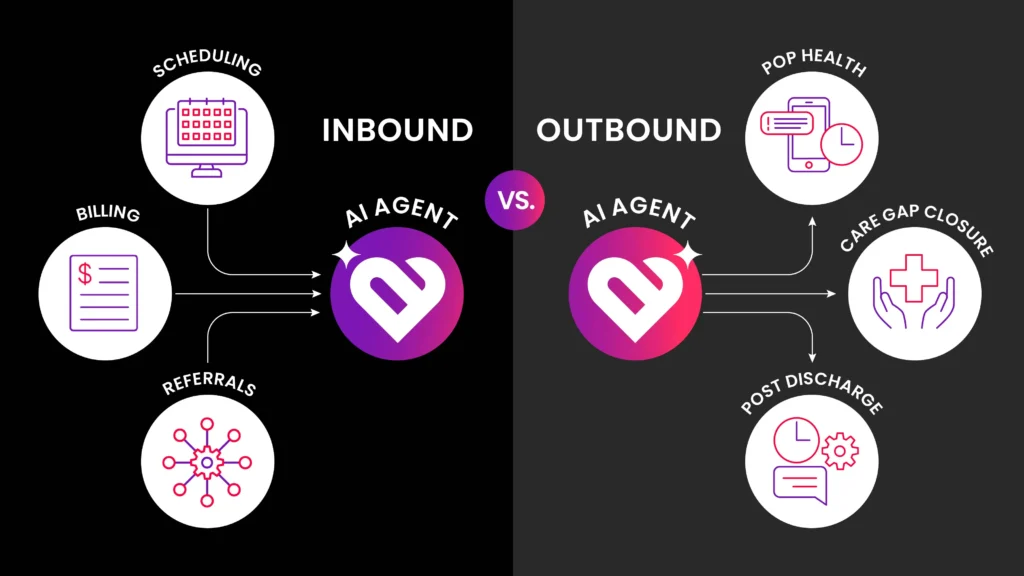
These agents handle complete workflows across multiple channels. Whether a patient needs to schedule an appointment, follow up on a billing question, or respond to a care gap reminder, AI Agents manage the process in real time from start to finish. They work independently, understand natural language, and access relevant systems like the EHR to complete tasks without human input.
These agents are especially useful in reducing wait times, eliminating bottlenecks, and increasing the number of patient issues resolved on the first attempt. They also escalate complex or sensitive matters when needed, ensuring safety and compliance at every step.
Flows Agents
Flows Agents are structured, rules-based virtual assistants that manage high-volume, low-variation interactions with precision. From sending appointment reminders and collecting forms to delivering pre-visit instructions or answering FAQs, they execute well-defined tasks at scale with zero deviation from their intended behavior. Because Flows Agents follow logic trees instead of generative language, they are highly predictable and trusted for workflows where compliance, accuracy, and speed are critical. They are often the ideal starting point for healthcare organizations beginning their AI journey.
Harmony Co-Pilot Agents
Harmony Co-Pilot Agents act as intelligent assistants for your frontline staff. During live conversations, they surface real-time insights such as sentiment analysis, conversation summaries and message classification. They also offer smart suggestions, sentence rewrites, and translation tools to help agents communicate clearly and efficiently across multiple languages and channels.
By reducing manual lookups and guesswork, Co-Pilot Agents accelerate time to resolution, reduce stress for staff, and ensure patients feel heard and understood. These tools are especially helpful in fast-paced environments like contact centers or care coordination teams.
All three work together across voice and text. The platform supports true omni-channel engagement. Patients can connect using the method that suits them best, such as phone or text message. AI agents maintain context and consistency across each channel to ensure a seamless experience. Built on Artera’s privacy-first infrastructure, our agents integrate with your EHR, support omnichannel communication, and follow healthcare-grade security protocols.
Smarter Service for Your Patients
If your contact center is overwhelmed, your patients are waiting, or your agents are overburdened, now is the time to evolve.
With Artera, you do not have to overhaul everything. Start small. Scale fast. Improve First Call Resolution with the only AI platform built from the ground up for healthcare communication.
Ready to Resolve More on the First Call?
- Reduce call volume without reducing quality
- Route smarter, respond faster, resolve fully
- Partner with a platform that grows with your needs
Book a walkthrough of Artera’s intelligent FCR solutions today.